





Identify the dog foods that fuel yeast infections and eliminate the fillers causing your pet’s relentless itching and discomfort.
Is your dog constantly licking their paws? Do their ears have a strange, musty odor that reminds you of corn chips? If you are nodding your head, your furry friend is likely battling a yeast overgrowth. While many owners rush to buy medicated shampoos, the real culprit is often sitting right in the food bowl. Selecting the worst dog food for yeast infection can turn a minor skin irritation into a full-blown health crisis.
Yeast, specifically Malassezia, is a fungus that lives naturally on a dog’s skin. However, when the environment is “just right”—warm, moist, and fueled by the wrong nutrients—it multiplies uncontrollably. To help your dog find relief, you must understand which ingredients act as high-octane fuel for these fungal invaders.
High-Carbohydrate Kibble: The Sugar Connection
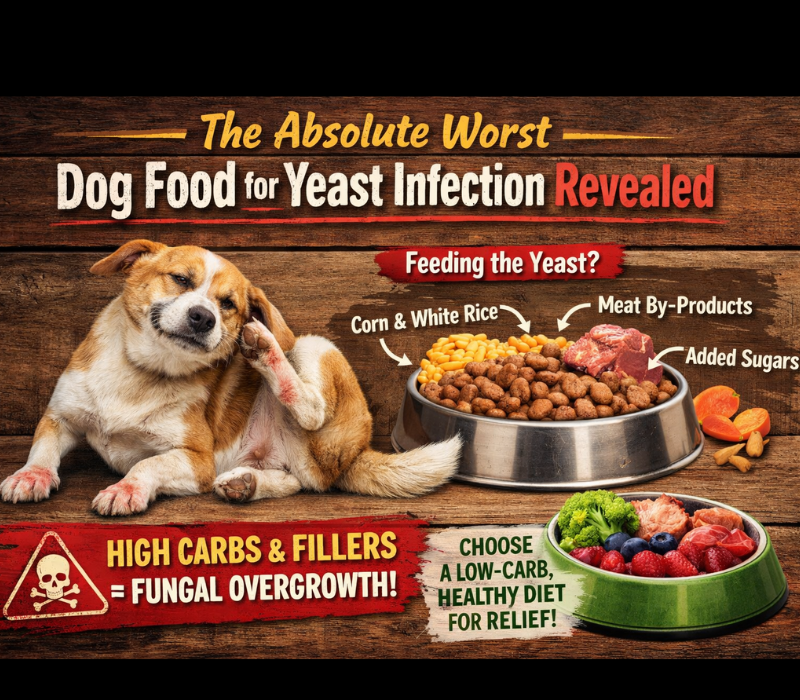
When we discuss the worst dog food for yeast infection, high-carbohydrate kibble sits at the top of the list. Why are carbs so dangerous? It comes down to basic biology. Yeast feeds on sugar. When a dog consumes a diet heavy in corn, wheat, rice, or potatoes, their body breaks these complex carbohydrates down into simple sugars.
Many commercial kibbles are held together by these starches. If the bag you are buying lists corn or white rice as one of the first three ingredients, you are essentially feeding the yeast a feast. This sugar spike enters the bloodstream and eventually permeates the skin’s surface, providing a buffet for fungal spores. If you want to stop the scratching, you must stop the sugar supply.
Grain-Heavy Dog Food And Rapid Fungal Growth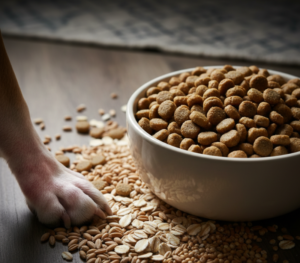
Is your dog’s diet packed with barley, oats, or sorghum? While grains are often touted as healthy fillers, grain-heavy dog food is frequently the worst dog food for yeast infection. The primary issue is the glycemic index. Grains significantly increase insulin levels, which in turn promotes inflammation and feeds the yeast population.
Excess grains do more than just provide sugar; they can also be difficult for a dog’s digestive system to process efficiently. When the gut microbiome is out of balance due to an overload of grains, the immune system weakens. A compromised immune system cannot keep yeast populations in check, leading to those red, crusty patches on your dog’s belly and paws.
Foods With Added Sugar Or Sweeteners: An Unseen Enemy
It might surprise you to learn that some dog foods contain literal sugar. Ingredients like molasses, corn syrup, or even fructose are sometimes added to improve palatability or texture. These are arguably the most blatant components of the worst dog food for yeast infection.
Why would a manufacturer add syrup to dog food? Usually, it’s to mask the taste of low-quality ingredients. However, for a dog with a yeast predisposition, this is poison. Artificial sweeteners can also disrupt the delicate balance of bacteria in the gut. If you see anything ending in “-ose” or any mention of “syrup” on the label, put the bag back on the shelf immediately.
Low-Quality Commercial Dog Foods: Fillers And By-Products
Not all protein is created equal. Low-Quality commercial dog foods often rely on “meat by-products” or “animal meal” of unknown origin. These mystery meats are frequently processed at high temperatures, which can denature the proteins and make them highly allergenic.
These cheap fillers trigger systemic inflammation. When a dog’s skin is inflamed, it produces more oil (sebum). Yeast loves oil. By feeding a low-grade diet, you are creating a greasy, inflamed skin environment where yeast thrives. Furthermore, the lack of quality Omega-3 fatty acids in these budget foods means the skin barrier remains weak and susceptible to infection.
Highly Processed Dog Food: Weakening The Defense System
The more processed a food is, the less biological value it holds for your pet. Highly processed dog food is packed with preservatives like BHA, BHT, and ethoxyquin. While these chemicals keep the food shelf-stable for months, they can wreak havoc on a dog’s internal organs.
A dog’s immune system is the first line of defense against yeast. When the body is busy trying to detoxify synthetic additives and chemical preservatives, it has less energy to fight off fungal overgrowth. This creates a vicious cycle: the food feeds the yeast with carbs while simultaneously handicapping the immune system’s ability to fight back.
Dairy-Based Foods: A Common Yeast Trigger
Does your dog love a slice of cheese or a dollop of yogurt? While some dogs handle dairy fine, for others, it is a primary ingredient in the worst dog food for yeast infection. Most adult dogs are somewhat lactose intolerant.
Dairy products like milk and cheese can cause gut inflammation and increase mucus production. In the world of holistic pet care, it is well-known that “damp” environments (internally) encourage fungal growth. If your dog is struggling with chronic ear infections or itchy skin, removing all dairy is a crucial first step in their recovery.
Dog Foods With Artificial Colors And Flavors
Does your dog’s kibble look like a bowl of colorful cereal? If so, you are likely feeding them red 40, blue 2, or yellow 5. These artificial dyes provide zero nutritional value and are known allergens.
When a dog has an allergic reaction to these chemicals, they scratch. Scratching creates micro-tears in the skin. These tiny wounds, combined with the heat of inflammation, create a “greenhouse effect” on the skin surface—perfect for yeast to colonize. Avoiding artificial colors is an easy way to reduce the “toxic load” on your dog’s body.
Excess Starchy Vegetables: The Hidden Sugar Source
Many “grain-free” dog foods have replaced wheat and corn with peas, lentils, and chickpeas. While this sounds healthier, excess starchy vegetables can be just as problematic. Peas and potatoes are very high in starch.
If the “grain-free” food you’ve switched to is 40% peas, you haven’t actually solved the sugar problem. You’ve just changed the source. For a dog battling a severe infection, even these “healthy” starches can be part of the worst dog food for yeast infection. You should look for recipes that prioritize leafy greens and low-glycemic vegetables over heavy tubers and legumes.
How To Identify The Worst Dog Food For Yeast Infection (A Checklist)
To ensure you aren’t accidentally sabotaging your dog’s health, use this quick checklist when reading ingredient labels:
Avoid These Ingredients Why?
White Potatoes / Tapioca Extremely high glycemic index; feeds yeast instantly.
Corn Syrup / Molasses Pure sugar that causes fungal explosions.
Animal By-Products Low-quality protein that triggers inflammation.
Brewers Rice A simple carb that converts to sugar rapidly.
Artificial Colors Increases skin irritation and allergic response.
Frequently Asked Questions (FAQ)
Can a change in diet really cure a yeast infection?
While diet alone may not “cure” a deep-seated infection instantly, it is the most important factor in long-term management. Without removing the food source (sugar/carbs), the yeast will continue to return even after medical treatment.
Is grain-free dog food always better for yeast?
Not necessarily. As mentioned, many grain-free foods use potatoes or peas, which are still starches. You need a low-carb diet, not just a grain-free one.
How long does it take to see results after changing food?
The skin takes about 21 to 30 days to regenerate. You should see a reduction in itching within 2 weeks, but it may take a full month to see the skin clear up completely.
Can I give my dog fruit if they have a yeast infection?
It is best to avoid high-sugar fruits like bananas and apples during an active breakout. Stick to a few blueberries, which are lower in sugar and high in antioxidants.
Final Calculations: Choosing The Right Path
When you eliminate the worst dog food for yeast infection, you are doing more than just stopping the itch; you are rebuilding your dog’s health from the inside out. A diet focused on high-quality proteins, healthy fats (like salmon oil), and low-glycemic vegetables will starve the yeast and nourish the skin.
Remember, every dog is an individual. What works for one may not work for another. However, the science of yeast is universal: sugar is the enemy. By vigilantly reading labels and avoiding the fillers mentioned above, you give your dog the best chance at a comfortable, itch-free life.